Related Articles


The mountaineering path by way of Temescal Canyon in western Los Angeles is a favorite of locals.
Towering above the twisting roads and manicured houses that make up the Pacific Palisades, city hikers searching for an escape from America’s famously gridlocked metropolis have a transparent view of the pristine waters of the Pacific.
Now the inexperienced, brush-lined path in the canyons is gray and burned so far as the eye can see.
Yellow police tape surrounds the path up to the path. Police guarding this space are calling it a “crime scene” and prevented BBC reporters, together with me, from getting any nearer.
It is the place investigators suppose the lethal blaze that destroyed so many houses in the space might have started.
The same scene is taking part in out throughout city in the north of the metropolis. There, the neighborhood of Altadena was levelled by a distinct hearth that ignited in the San Gabriel Mountains.
Investigators in each places are scouring canyons and trails, and inspecting rocks, bottles, cans – any particles left behind which may maintain clues to the origins of those blazes, that are nonetheless unknown.
It is the one factor on-edge and devastated Angelenos are determined to know: how did these fires begin?
With out solutions, some in fire-prone California are filling in the gaps themselves. Fingers have been pointed at arsonists, energy firm utilities or perhaps a blaze days prior in the Pacific Palisades that was snuffed out however might have re-ignited in the face of Santa Ana winds blowing at 80-100mph (128-160 kmph) final week.
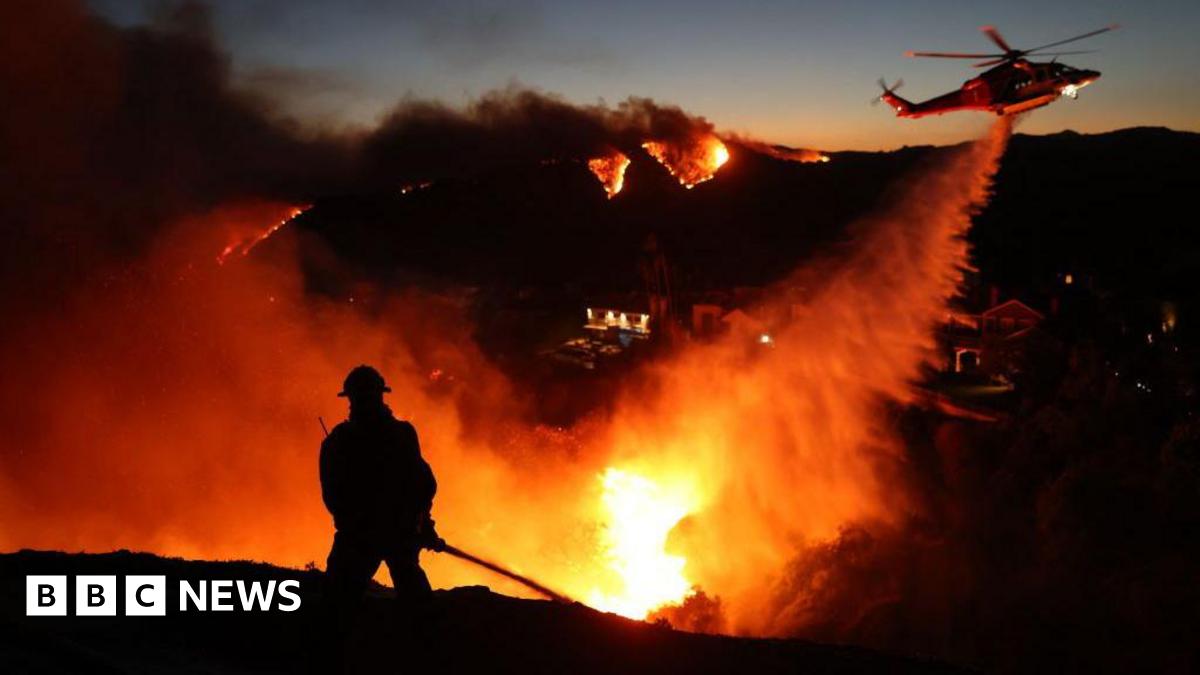
Investigators are inspecting all these theories and extra. They’re following dozens of leads in the hopes that clues in burn patterns, surveillance footage and testimony from first responders and witnesses can clarify why Los Angeles noticed two of the most damaging hearth disasters in US historical past ignite on 7 January, thus far killing 27 folks and destroying greater than 10,000 houses and companies.
However this tragic thriller will take time to remedy – probably so long as a 12 months.
“It is simply too early,” Ginger Colbrun, a spokeswoman for the Los Angeles division of the US Bureau of Alcohol, Tobacco, Firearms and Explosives (ATF) instructed the BBC.
“Everybody desires solutions, we wish solutions, the neighborhood desires solutions. They deserve a proof. It simply takes time.”