Related Articles



The crop has been half of these lush highlands since the late Nineties, when British colonial settlers launched it.
Now, the space is legendary for its distinctive, top-rated espresso.
Rising the berries is labour intensive – choosing, pruning, weeding, spraying, fertilising and transporting the merchandise.
“Espresso requires your full-time focus, particularly when it begins to bloom,” Mr Macharia mentioned.
“From that second up till the day that you will harvest – these six months, your full-time job is on the farm.”
A espresso tree is a big funding for cash-strapped farmers, as it may take 4 years for the fruits to mature.
The value of a single cup of espresso in an elegant European café, usually $4 (£3.20), highlights a stark disparity when in comparison with the earnings of many Kenyan espresso labourers, who make at most $2.30 a day.
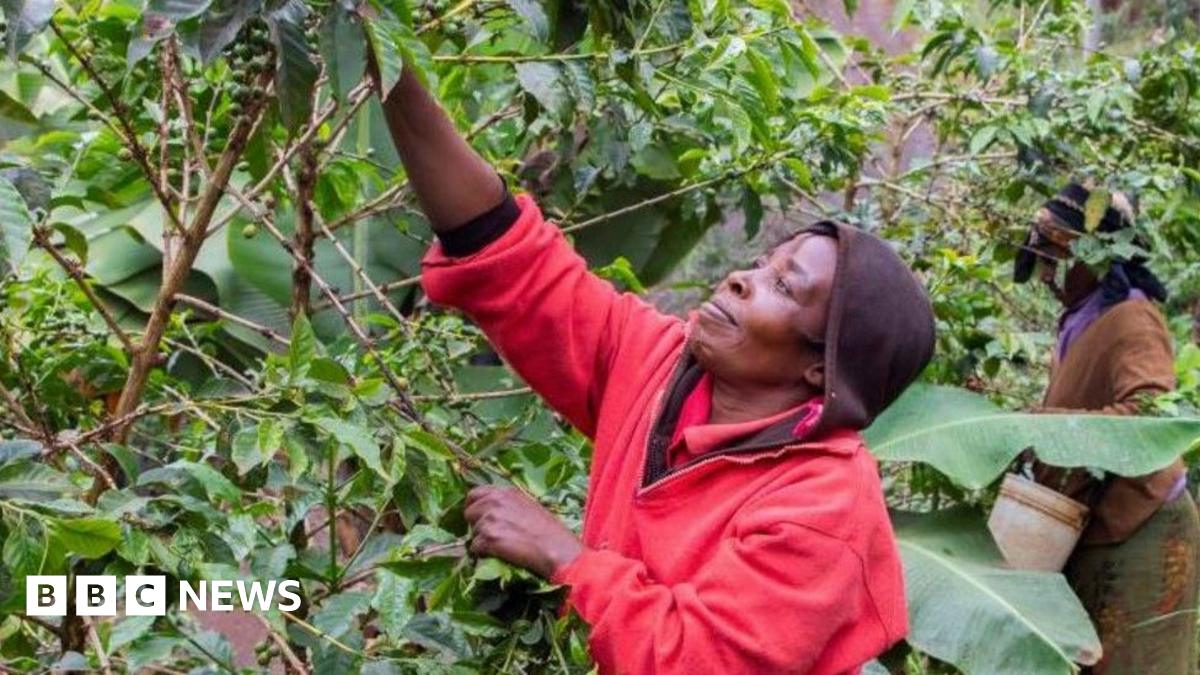
Edita Mwangi, who harvests espresso cherries on the pink earth hillside overlooking the processing plant, confirms this.
“They do not know the poverty we endure. You need to wrestle day and night time simply to outlive,” she mentioned.
With 4 kids relying on her, Ms Mwangi works six days every week, incomes about $1.40 a day.
She has to stroll 5km (three miles) to achieve the farm the place she works.