Related Articles


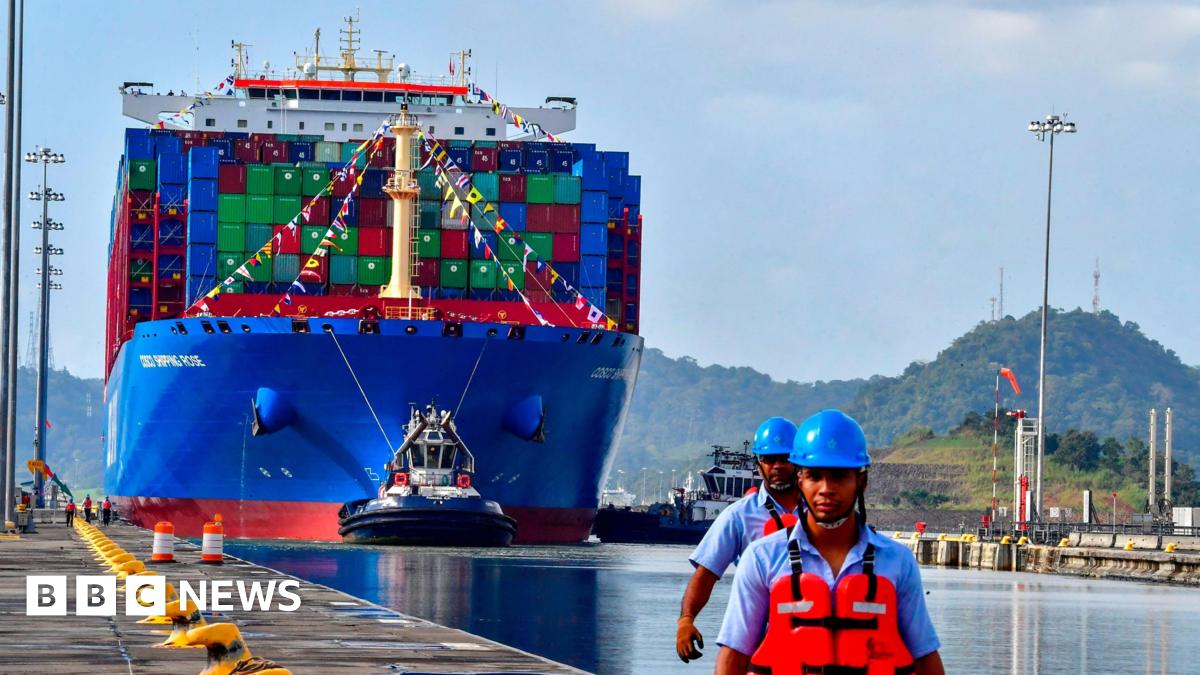
Two of the 5 ports adjoining to the canal, Balboa and Cristóbal, which sit on the Pacific and Atlantic sides respectively, have been operated by a subsidiary of Hutchison Port Holdings since 1997.
The corporate is a subsidiary of the publicly listed CK Hutchison Holdings, a Hong Kong-based conglomerate based by Hong Kong businessman Li Ka-shing. It has port operations in 24 nations, together with the UK.
It has port operations in 24 nations, together with the UK.
Though it’s not state-owned by China, says Ryan Berg, director of the Americas Program on the Centre for Strategic and Worldwide Research, there have been considerations in Washington over how a lot management Beijing would have the ability to exert over the corporate.
A wealth of doubtless helpful strategic info on ships passing by way of the waterway flows by way of these ports.
“There’s an rising geopolitical pressure of financial nature between the US and China,” Mr Berg says. “That type of info concerning cargo could be very helpful within the occasion of a provide chain warfare.”
CK Hutchison didn’t reply to the BBC’s request for remark.
The bids to function these ports confronted nearly no competitors, in line with Andrew Thomas, a professor on the College of Akron who has written a e-book on the canal. “The US on the time did not actually care about these ports and Hutchison confronted no objection,” he says.
Chinese language corporations, each non-public and state-owned, have additionally strengthened their presence in Panama by way of billions of {dollars} in investments, together with a cruise terminal and a bridge to be constructed over the canal.
This “package deal of Chinese language actions”, as described by Mr Thomas, may need prompted Trump’s assertion that the canal is “owned” by China, however operation of these ports doesn’t equate to possession, he stresses.
Beijing has repeatedly stated that China’s ties with Latin America are characterised by “equality, mutual profit, innovation, openness and advantages for the folks”.